Why Your Current IDX Website for Realtors is Probably Costing You Money
Why Most IDX Websites for Realtors Are Quietly Losing You Leads
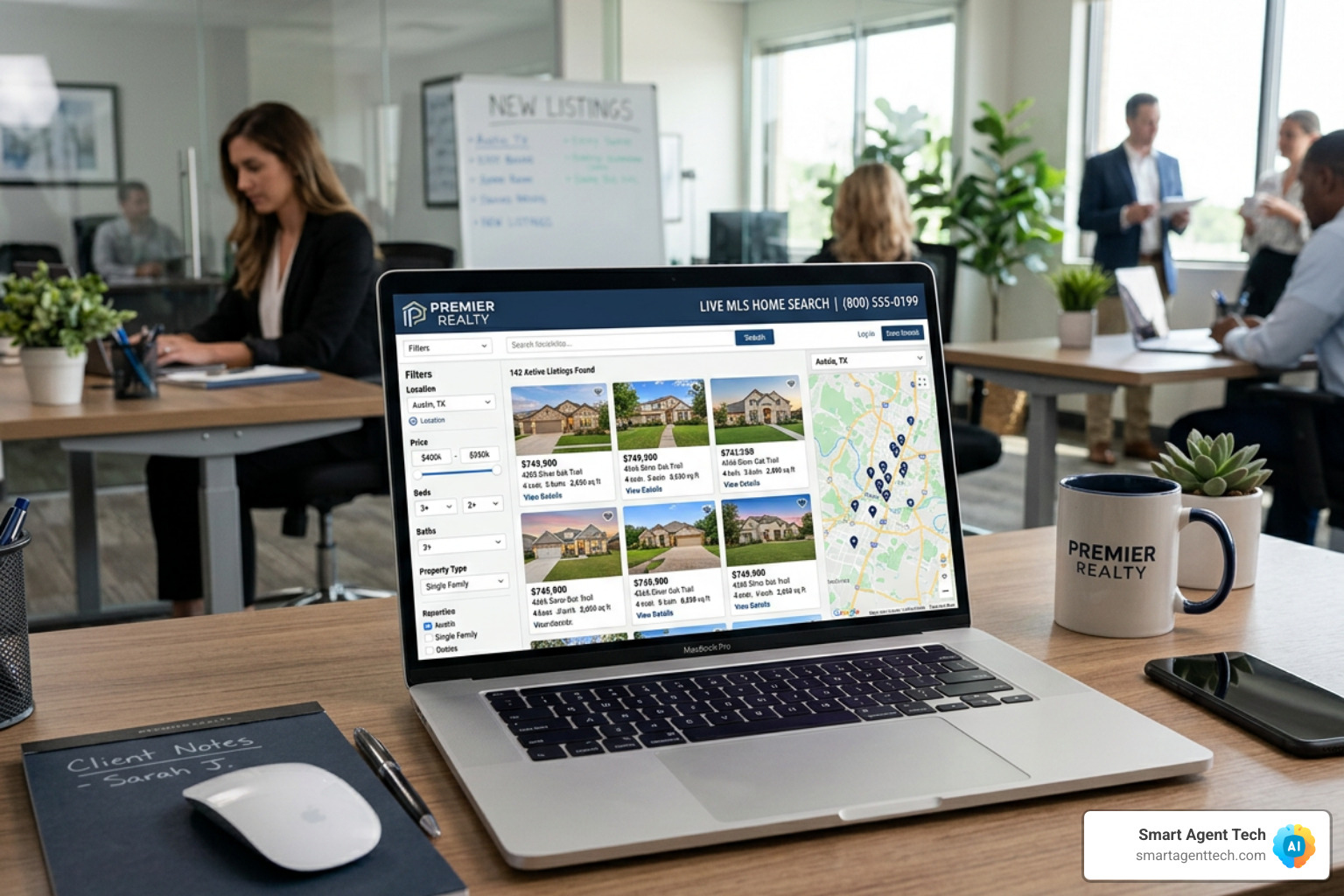
IDX websites for realtors are branded real estate sites that pull live MLS listings directly onto your domain, so buyers can search homes without leaving your site. Most platforms fall into three categories:
Entry-Level Sites: Best for budget-conscious new agents looking for a basic web presence.
Lead Generation Platforms: Focused on high-volume lead capture and nurturing.
Custom Solutions: Designed for teams needing unique branding and high-end design.
Here's the uncomfortable truth: most agents are paying for an IDX website that looks fine but quietly bleeds leads every single day.
Buyers spend an average of less than two minutes on a real estate website. If your search is clunky, your pages load slowly, or your lead capture is buried, they're gone — straight to national search portals.
And that's money walking out the door.
The gap between a mediocre IDX site and a high-converting one isn't just design. It's the search experience, the mobile feel, the automation behind the scenes, and how well the whole thing ties into your follow-up process.
I'm Todd Bogert, a Real Estate Website Consultant and owner of Smart Agent Tech, with over a decade of hands-on experience building high-performance IDX websites for realtors across multiple industry-leading platforms. In this comparison, I'll break down exactly what separates the platforms that generate revenue from the ones that just take up space.
Understanding the Value of a Modern IDX Website for Realtors
To understand why your current site might be failing you, we have to look at what an idx website for realtors actually does. IDX stands for Internet Data Exchange. It is the software "handshake" between your website and the Multiple Listing Service (MLS). In our local markets like Phoenix AZ and Buckeye AZ, this means your site can display thousands of listings from every brokerage in the valley, not just your own.
But simply having the data isn't enough. Modern buyers have high expectations. If your site feels like a relic from 2010, they will bounce. Research shows that the average buyer spends less than two minutes on a real estate site before moving on. To keep them, your site needs:
Real-Time Updates: New listings should be added every 15 minutes, and status changes (like a home going under contract in the West Valley AZ) should update hourly.
Search Intent Alignment: If a user searches for "homes with a pool in Phoenix," they shouldn't be dumped onto a generic homepage.
Mobile Responsiveness: More than half of all real estate traffic now comes from mobile devices. If your property photos don't swipe easily on a thumb, you've lost the lead.
SEO Framework: An indexable IDX allows Google to see the individual listing pages on your site, helping you rank for specific addresses or neighborhood terms.
When done correctly, your website stops being a digital business card and starts acting as a 24/7 market authority that builds trust while you sleep.
Essential Features for High-Converting Search
The "Search" button is the most clicked element on any real estate site. If that experience is frustrating, nothing else matters. High-performing platforms prioritize the user's journey through deep functionality.
Hotsheets: These are automated market reports that show new listings, price drops, and recently sold data. They provide instant value to both buyers and sellers.
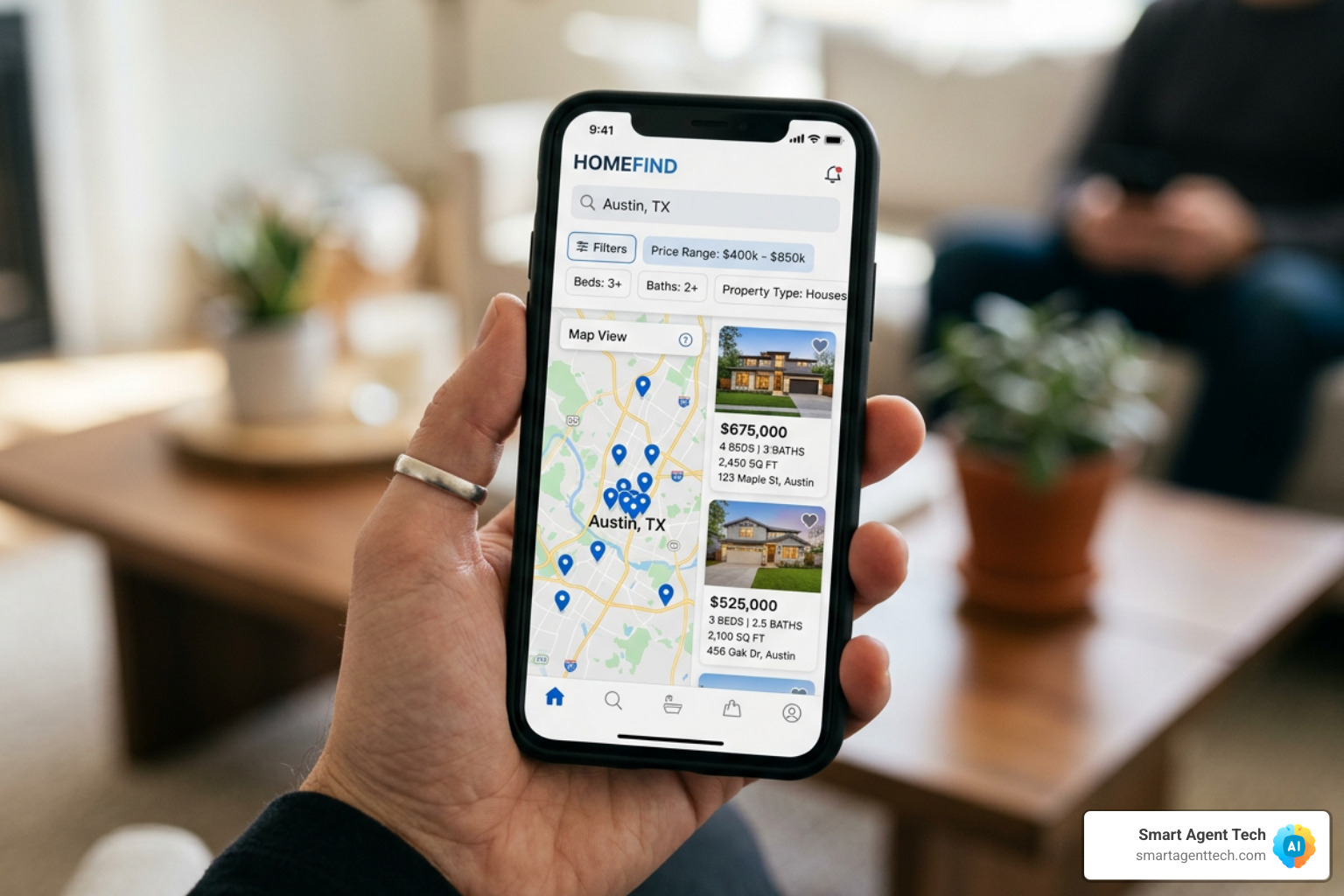
Map-Based Search: Buyers in the West Valley AZ often search by school boundaries or proximity to work. A robust map search with polygon drawing tools is non-negotiable.
Property Alerts: Automated emails that notify users the second a home hitting their criteria hits the market. This keeps them coming back to your site instead of the national portals.
Hyperlocal Data: Integration of school ratings, walk scores, and neighborhood guides helps position you as the local expert.
Maximizing Lead Capture on Your IDX Website for Realtors
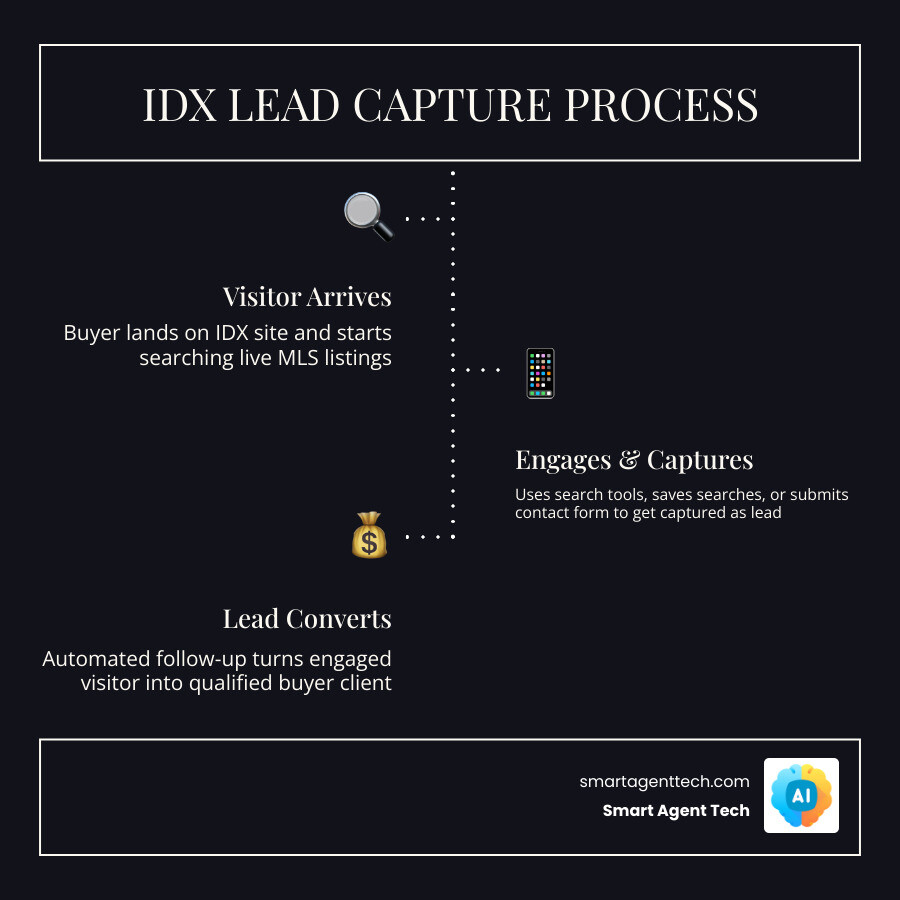
Traffic is vanity; conversion is sanity. You can have thousands of visitors, but if they don't leave their contact info, your ROI is zero. We recommend a balanced approach to lead capture that feels helpful rather than aggressive.
Using the Smart Agent Suite, agents can implement "Purposeful Lead Capture." This includes:
Forced vs. Suggested Registration: You can set your site to require an email after the third property view, or keep it open to build brand affinity.
Social Sign-in: Allowing users to log in with Google or Facebook increases conversion rates by removing the friction of typing in a password.
Home Valuation Tools: A "What's My Home Worth?" tool is the single best way to capture seller leads in Phoenix AZ.
Behavioral Tracking: Knowing exactly which houses a lead looked at allows for much smarter follow-up.
Advanced SEO Strategies for an IDX Website for Realtors
To compete with the big portals, you can't outspend them on ads, but you can out-local them. SEO for an idx website for realtors relies on "Long-Tail Keywords."
Instead of trying to rank for "Phoenix Real Estate," we focus on "homes for sale in Verrado Buckeye AZ" or "single story homes in West Valley with 3 car garages."
Our Marketing Tools help you leverage:
Community Pages: Dedicated pages for specific subdivisions that pull in live IDX data automatically.
Schema Markup: Technical code that tells Google your page is a "Real Estate Listing," which can lead to rich snippets in search results.
Fast Load Speeds: Google penalizes slow sites. A high-performing IDX platform ensures that heavy image files don't bog down your performance.
Content Repurposing: Using AI tools to turn a new listing into a blog post or a neighborhood market update.
Comparing Costs: Setup Fees vs. Long-Term ROI
One of the biggest mistakes agents make is looking only at the monthly price. You have to consider the "Total Cost of Lead Acquisition." A $59/month site that generates zero leads is infinitely more expensive than an $899/month platform that closes two extra deals a year.
Factor DIY / Plugin (e.g., WordPress + Plugin) Managed Platform (e.g., Smart Agent Suite) Setup Fee Low ($0 - $200) Moderate to High ($200 - $1,000+) Monthly Cost $40 - $150 $400 - $1,000+ Maintenance You handle updates/bugs "Done-for-you" support SEO Potential High (if you know what you're doing) Built-in and optimized CRM Integration Often requires 3rd party (Zapier) Fully integrated
When evaluating How It Works, "free" or cheap sites often have hidden costs. For example, some platforms charge extra for "IDX Support" or have high per-lead costs if you use their built-in ad management.
Why Smart Agent Tech is the Future of Real Estate Search
While many standard IDX platforms are solid, they all share one major flaw: they rely entirely on the standard MLS feed. In a competitive market like Buckeye AZ, by the time a house hits the MLS, it might already be too late for your buyers.
This is where Smart Agent Tech changes the game. We provide an all-in-one platform that includes a CRM, AI tools, and a approach to listings. Our standout feature is the New Home Source integration.
This gives our agents exclusive, real-time access to pre-MLS new construction listings. In the West Valley AZ, where new builds are exploding, having access to inventory that isn't on national portals is a massive competitive advantage. We also offer exclusive territories (1 agent per territory), ensuring that you aren't competing with 500 other agents for the same "exclusive" leads.
Our platform integrates:
Cash Offers: Tools to help your clients compete with institutional buyers.
AI Lead Nurture: Automated, intelligent texting and emailing that sounds human.
Full CRM Integration: No more "exporting CSVs." Your leads flow directly from your IDX search into your follow-up dashboard.
Frequently Asked Questions and Conclusion
Choosing the right idx website for realtors is the foundation of your digital marketing hub. It’s not just about showing houses; it’s about managing relationships and proving your value as a local expert in Phoenix AZ.
How long does it take to set up an IDX feed?
Typically, it takes 3 to 10 business days. The delay isn't usually technical; it's the paperwork. Your local MLS board must approve your request to display their data. We handle the heavy lifting of the paperwork, but the board's compliance review is the final step before the feed goes live.
Do I need a separate CRM for my IDX site?
You can use a separate one, but we don't recommend it. When your CRM and IDX are integrated, you can see exactly when a lead returns to your site and which homes they are "favoriting." This allows for much more timely and relevant follow-up. Platforms like ours offer a unified system to keep your data clean and your workflows simple.
How do IDX websites help agents gain a competitive edge?
Major real estate portals want to sell your leads back to you. An IDX website allows you to own the data and the relationship. By providing exclusive content—like our pre-MLS new construction listings—and hyperlocal expertise, you give clients a reason to stay on your site instead of wandering back to the major third-party portals.
If you’re ready to stop losing leads to clunky tech and start using a platform designed for the 2026 market, visit us at https://smartagenttech.com to see how we can help you dominate your local territory.
